
 Proudly Serving West Michigan & Mid Michigan
 (616) 207-4097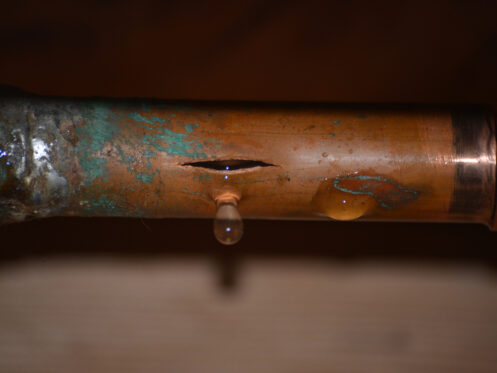
In colder months, small cracks, loose fittings, and stressed connections can leak slowly behind walls, under floors, or inside ceilings while everything looks normal from the outside. You may notice a higher water bill, a damp smell that comes and goes, or a spot that never quite dries. It can be easy to blame humidity or winter weather, when in actuality, you may be dealing with a hidden plumbing leak. It’s important to spot these signs early and solve the issue before damage worsens.
Why Winter Turns Small Plumbing Weak Points Into Quiet Leaks
Cold weather changes how plumbing behaves inside your home. As temperatures drop, pipes contract, fittings tighten, and older joints shift a bit. Those movements don’t always cause a sudden burst. More often, they open tiny gaps that let water slip out in a slow, steady way. Since the flow can be small, you might not hear anything, and you might not see a puddle.
A slow seep can soak insulation and framing long before drywall shows a stain. In many plumbing leaks that Michigan homeowners deal with during cold snaps, the first sign is a higher bill or a damp smell that comes and goes. That is why winter plumbing problems can feel like they appear out of nowhere. The leak has often been there for weeks, feeding moisture into places you don’t check until a stain shows up.
Behind Walls and Along Exterior Runs
Supply lines inside walls are a classic place for silent leaks because the pipe is out of sight and the sound stays muffled. Copper pipes can develop pinholes. Older steel can thin from the inside. Plastic piping can leak at fittings when a connection loosens. Winter adds stress because colder water entering the line chills the pipe fast, and warm indoor air heats it back up. That repeated swing pushes on joints and fittings in a way that a mild season doesn’t.
The clues are usually small. Paint may bubble in one spot. A wall might feel cooler or slightly damp compared to the wall next to it. Baseboards can swell, lift, or separate at a corner. Water can also travel along framing so that the stain might show up a few feet away from the leak. If you notice a spot that darkens after showers or laundry, treat it as a signal. A plumber can locate the source and stop water from soaking the structure.
Under Sinks Where Drips Stay Hidden
Cabinets under sinks hide a lot of connections in a small space. Supply lines flex when you bump them with stored items. Shutoff valves sit untouched for years. Drain traps loosen from normal vibration. In winter, valve seals stiffen, and compression fittings can shift just enough to start a slow drip. That drip may never reach the floor. It can soak into the cabinet base, especially if the cabinet is made from particle board.
Look for the everyday hints. The cabinet may smell musty when you open the door. The wood near the back panel may look swollen or feel rough. A metal valve may show a crusty ring. A shelf liner keeps feeling damp, no matter how many times you wipe it. These hidden water leaks often start small and stay quiet until the cabinet base warps or the drywall behind the sink softens. If you see repeated dampness in this space, a professional should check the fittings, the valve bodies, and the drain joints.
Water Heater Connections That Start Seeping
Water heaters can lose water in ways that are easy to miss. When incoming water arrives colder, the heater runs longer to bring it up to the set point. That extra work increases expansion inside the tank and adds stress at threaded connections, shutoff valves, and relief components. A leak might show up as a slow bead at the hot outlet, a damp ring around the drain valve, or moisture that appears at the base and dries before you notice it.
Pay attention to the area around the heater, not just the tank. Rust streaks on the jacket, corrosion at the inlet or outlet, or a damp smell near the platform can point to a slow issue. If the heater sits near a floor drain, water can disappear without leaving a puddle. A slow leak here can damage drywall, nearby framing, and anything stored close to the unit. If you notice recurring dampness, don’t wait for a full failure. A plumber can test fittings, confirm relief valve behavior, and check for seepage at the expansion tank and nearby valves.
Floors, Ceilings, and Basements That Point to a Leak
Some leaks never show up where you expect. They show up as changes in the house. A floor near a bathroom may feel slightly soft in one spot. A ceiling below a second-floor bath may develop a faint stain that looks like a shadow. A basement wall may show dampness that comes and goes. During winter, snowmelt and condensation can confuse the picture, so it is easy to blame the weather and move on.
Patterns help you sort it out. Does the spot get darker after showers or laundry? Does the damp smell return after the furnace has been running for a few hours? Do you see a thin line at a drywall seam that keeps reappearing? Water can wick along joists and then drip in a different location, so the first stain you see may be the end of the trail. If you have finished basement areas, watch baseboards and carpet edges. Moisture can hide behind them and then spread into the padding and subflooring.
Early Signals You Can Catch
Silent leaks still leave clues. A water bill that climbs without a habit change is one of the clearest. Another is a damp smell that returns in the same spot, even after you clean and dry the area. Toilets that refill on their own can be a simple flapper issue, but they can also mask a larger leak by keeping water moving and pressure fluctuating in the system. You might also notice a single fixture that runs weak on a cold morning while others seem fine, which can happen when a supply line starts to restrict flow.
Take a photo of stains or swelling wood so you can tell whether the spot is growing. If you hear new tapping or popping from pipes that started this season, mention it when you call for help, since that sound can pair with stressed joints. Avoid forcing stubborn shutoffs or trying to heat walls with improvised devices. A licensed plumber can confirm the source safely and stop the loss before moisture spreads through the structure.
When It’s Time to Call a Professional Plumber
Some leaks hide behind tile, inside walls, or under slabs, and you will not locate them by looking harder. A professional can use moisture mapping, pressure testing, and leak detection methods to narrow the source without tearing up your home. That matters in winter because materials are already stressed, and delays give water more time to soak framing and insulation.
Stop Hidden Leaks Before Winter Damage Spreads
At Service Professor in Grand Rapids, MI, we help with leak detection, pipe repairs, fixture and valve replacement, water heater inspections, and emergency plumbing support when winter leaks surface unexpectedly.
Schedule a winter plumbing evaluation with Service Professor today.