 Proudly Serving West Michigan & Mid Michigan
 (616) 207-4097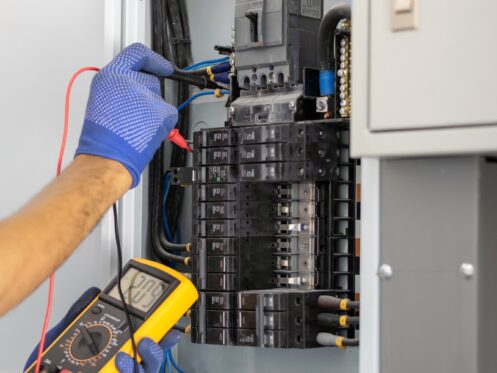
Winter in Michigan typically results in a significant increase in electrical demand in most households. This has the potential to overload the circuit breakers or even the entire electrical panel at the worst possible time of the year. Knowing how to spot the early signs of an overloaded electrical panel in a Michigan home will help you stay ahead of possible problems.
What Is an Electrical Panel Overload?
Your electrical panel directs current to different rooms via circuit breakers. Each circuit breaker has a rating in amps, which tells you how much power can flow through that specific circuit before it trips the breaker. The wiring on a circuit should have the same rating as its breakers.
An electrical circuit overload happens when too many devices or appliances draw power from a single circuit at the same time. When the total electrical demand exceeds the breaker’s amp rating, the breaker trips to stop the flow of electricity. This safety feature prevents wires from overheating, which can otherwise damage insulation, melt components, or even start a fire.
Overloading a Circuit
Supplemental heating is a classic cause of an overloaded electrical panel in Michigan. You might want to take the chill off in your living room on a particularly cold evening without cracking up your home’s furnace. For supplemental heating, you might plug in a small electric heater. This doesn’t seem like a big deal, but even many smaller heaters operate at 12 amps. Add a few more devices or another electric heater, and you can easily exceed the rating for a 15- or 20-amp circuit. The circuit is overloaded, and the breaker should trip.
Total Load
Your home’s electrical panel also has an amperage rating. This is how much total power can flow through the panel before its main breaker trips. Modern homes usually have 100-, 150-, or 200-amp ratings. You will find panels built before the 1980s that have ratings below 100 amps. Likewise, a panel’s capacity can degrade with time, eliminating some of your overhead.
Concurrent Electrical Demand
Plenty of other systems also draw on the electrical system, and winter invites many of them to run at once. Many households see a 30% increase in electrical consumption during a cold winter. A single system, like a furnace’s blower motor, can contribute more than ten amps of consumption on its own. These winter electrical problems can compound quickly as lots of other devices pile on, including:
- Washers and dryers
- EV charging stations
- Refrigerators
- Electric stoves and ovens
- Dishwashers
- Microwaves
Seemingly small devices can be sneaky power hogs, too. Hair dryers can pull more amps than some furnace blower motors, for example. High-end PCs draw lots of power, too. A household that uses a heat pump rather than a gas furnace can also see major electrical draws, especially when using backup electrical resistance power for heating.
Modern holiday lights are notably lower-power systems thanks to LED bulbs. However, adding thousands of lights across multiple strands can be enough to push a circuit over its rated load.
Power tools are notorious for tripping circuit breakers. Many tools draw high amperages during startup, and they also often operate in a more electrically unstable fashion. Winding up a circular saw one time is more than enough to trip a circuit breaker, especially one with a low rating.
More Concurrent Demand
With more people indoors during the winter, more people are also likely to overload a circuit breaker or even a whole electrical panel with their demand. Suppose a refrigerator starts its cycle at the same time the washer and dryer are running, the EV station is charging, the Christmas lights are on, and the furnace is running. Now, power up an electric tool, and you may find out exactly what your electric panel’s amperage rating is.
Diagnosing Overloads
The range of scenarios involving an overload covers everything from the inconvenience of a circuit breaker tripping to an electrical fire. Every time a circuit or a panel is overloaded, it weakens the system a bit, too. Consequently, identifying overloads early is important for electrical panel safety and preventing major risks like shock and fire.
Breakers Trip When Running Multiple Devices
In some ways, this is the ideal scenario because it means the safety systems are working. You can identify the specific breaker that’s failing fairly quickly by noting which one keeps tripping. If the problem is one breaker, you can usually have one of our electricians run a separate circuit for the devices that keep tripping it. For example, you might need to run new wiring and an extra circuit breaker to accommodate both a microwave and a refrigerator.
One major concern is when multiple devices cause the main breaker to trip. This is especially worrying in winter because it means there’s no electricity to power the heating system until you reset the main breaker. If you have more device demand than your electrical panel can handle, we may need to install a replacement panel.
It is sometimes tempting to think you can just swap in a higher-capacity breaker. Worse, this may appear to solve the problem. However, you risk running more amperage through the wiring than it can handle. Running a 30-amp breaker on a 20-amp wire can overheat the wire. That will eventually melt the wiring insulation, presenting a major fire hazard. This is another case where professional electrical repair and rewiring is necessary.
Flickering Lights
If one light is flickering, there is a good chance you just need to replace a bulb or a fixture. If several lights flicker when the heater comes on or you start the dryer, then your electrical panel may be approaching overload or just getting too old. We can check the panel and determine if a replacement is needed or if it’s possible for you to just upgrade a few breakers.
Smells
If you notice any smells near your home’s electrical panel, don’t ignore them. While panels and breakers are supposed to act as safety systems, they do become compromised. An old panel that has had many resets, for example, may weaken. Eventually, the overload starts passing through the circuit. When this happens, it can cause the air to smell funny. Also, it can melt plastic, which leaves a scent.
Discoloration
Any discoloration of the panel, breakers, or nearby area is a bad sign. Brown or blackened areas indicate that arcing or overheating is occurring. Plastic components may also melt. If you see any discoloration, contact us immediately.
Noises
People often associate buzzing and humming sounds with electrical systems. In a house with a modern system, you should never hear these sounds. If you hear electrical buzzing anywhere, contact us right away.
Get Expert Help
Service Professor has been in business for more than four decades. We have a reputation for unparalleled customer satisfaction and are proud to handle both residential and commercial needs. From installations and upgrades to maintenance and repairs, our licensed and trained electricians can handle a wide range of projects.
If you’re worried about home breaker trips or other signs of an overloaded electrical panel in Grand Rapids, MI, contact Service Professor immediately.